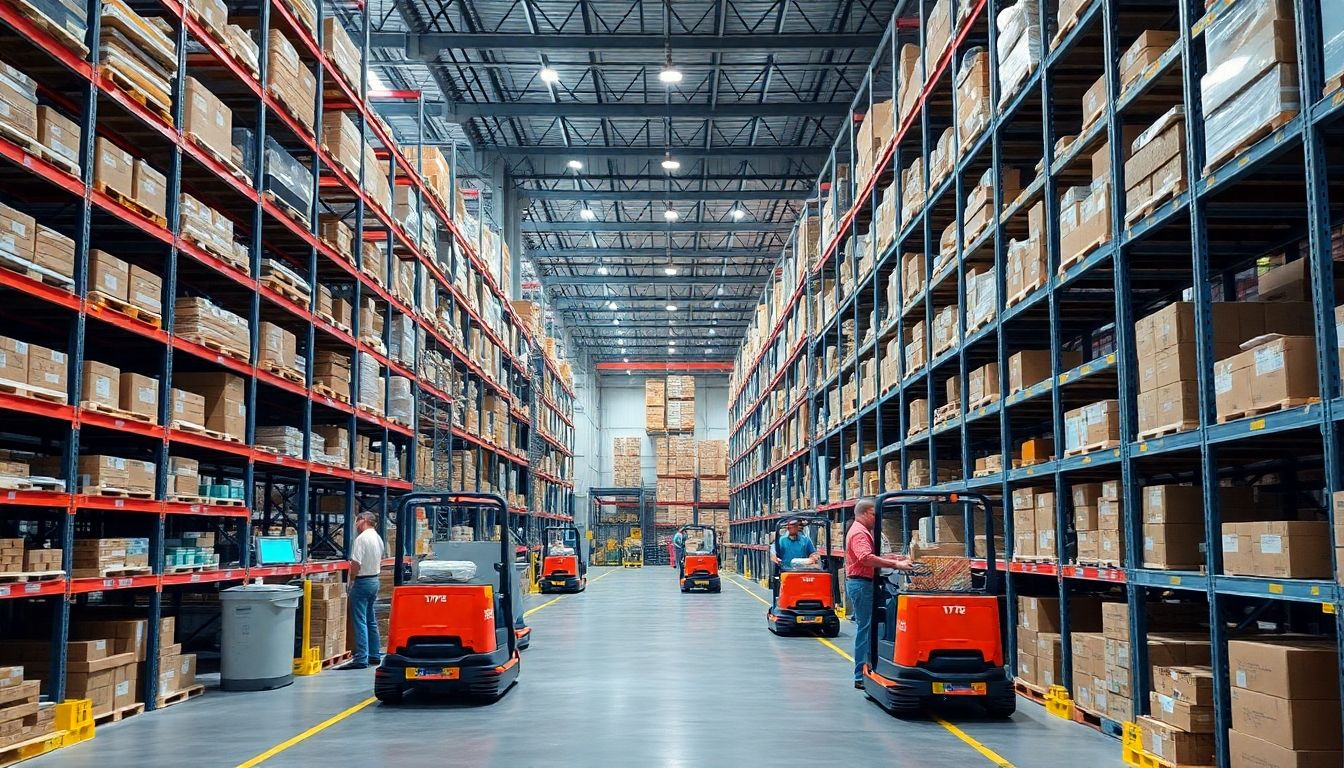



Managing a warehouse in Omaha, Nebraska can be a complex task, especially with the growing demands of logistics and supply chains. A Warehouse Management System (WMS) simplifies this process by streamlining operations, improving inventory accuracy, and enhancing overall efficiency. Whether it’s receiving goods, tracking inventory, or shipping orders, a good WMS keeps everything running smoothly.
Key Takeaways
- A WMS helps warehouses in Omaha, Nebraska manage daily operations like receiving, storing, and shipping goods.
- Automation tools such as RFID and barcode scanning improve accuracy and reduce errors.
- WMS systems make inventory tracking easy with real-time updates and replenishment features.
- Labor management becomes simpler with tools for monitoring performance and assigning tasks efficiently.
- Choosing the right WMS, including cloud-based options, ensures adaptability and cost-effectiveness.
Understanding the Role of a Warehouse Management System in Omaha, Nebraska
What Makes a WMS Essential for Warehouses
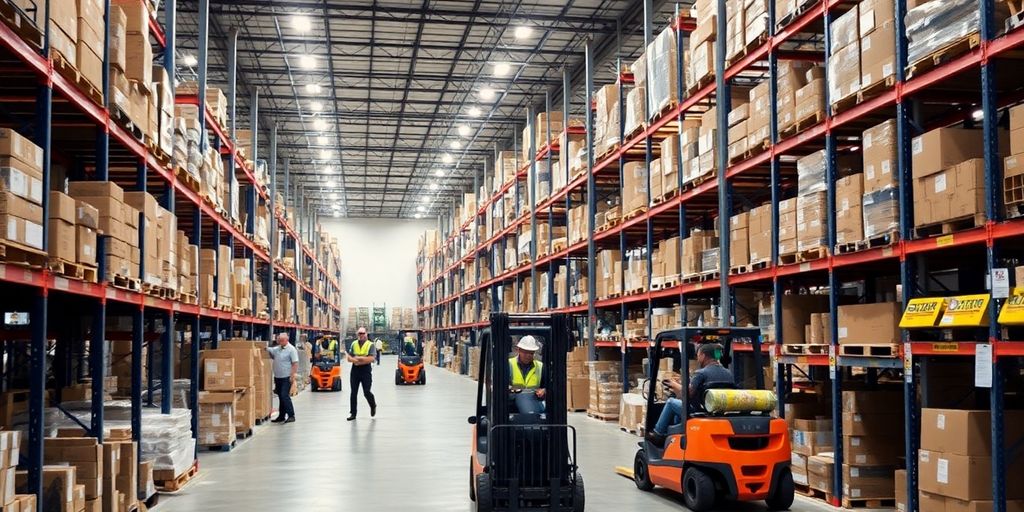
Running a warehouse without a solid Warehouse Management System (WMS) is like trying to navigate without a map. A WMS helps us stay organized, efficient, and on top of everything. It’s the backbone of modern warehousing.
Here’s why it’s indispensable:
- Streamlined Processes: From receiving shipments to shipping them out, a WMS keeps every step smooth and predictable.
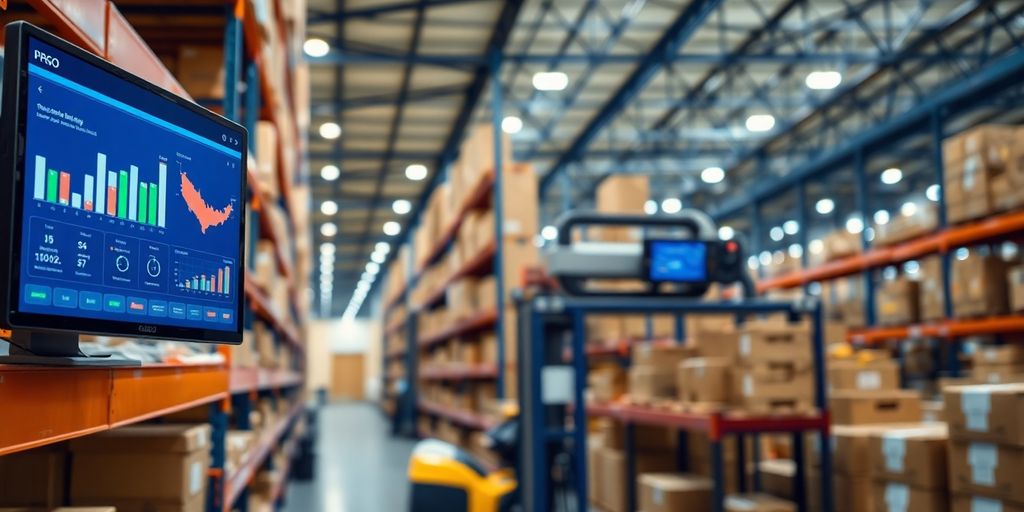
- Real-Time Inventory Visibility: Know exactly what’s in stock, where it’s located, and when it needs to be replenished.
- Improved Accuracy: By automating tasks like barcoding and scanning, we cut down on human errors.
Key Features of a Modern WMS
Not all WMS solutions are created equal. The good ones come packed with features that make our lives easier and our clients happier:
- Automation Tools: Think RFID scanning, automated picking systems, and even robotics.
- Integration Capabilities: A WMS should play nice with other systems like transportation management or ERP software.
- Custom Reporting: Track performance metrics, inventory trends, and operational efficiency with tailored reports.
How WMS Enhances Client Satisfaction
At the end of the day, a good WMS isn’t just about making our jobs easier—it’s about keeping our clients happy. Here’s how:
- Faster Turnaround Times: Orders are processed and shipped quicker, which means happier customers.
- Fewer Mistakes: Accurate inventory and automated workflows mean fewer mix-ups.
- Transparent Communication: With real-time tracking, clients can stay updated on their shipments.
A well-implemented WMS doesn’t just make warehouses better—it builds trust with clients by ensuring reliability and efficiency.
Streamlining Operations with Advanced WMS Technology
The Importance of Automation in Warehousing
Automation is like the heartbeat of a modern warehouse. It takes the guesswork and manual effort out of repetitive tasks, letting us focus on what really matters—getting products to our clients faster and with fewer mistakes. By automating processes, we can cut down on wasted time and reduce human error. Think about tasks like sorting shipments or updating inventory levels—these are things a Warehouse Management System (WMS) can handle in seconds. Plus, automation helps us manage higher volumes without breaking a sweat, which is a game-changer during peak seasons.
How RFID and Barcode Scanning Improve Accuracy
Ever tried finding a needle in a haystack? That’s what manual inventory tracking feels like. With RFID and barcode scanning, though, we can locate and track items in real time. These tools make sure every product is accounted for and in the right place. For example:
- RFID tags can track products as they move through the warehouse.
- Barcodes ensure the right items are picked and shipped.
- These systems also cut down on mis-picks, saving us time and money.
This level of accuracy means fewer returns and happier clients, which is always the goal.
Integrating Robotics for Efficient Workflows
Robots aren’t just cool—they’re incredibly practical for warehousing. They help with heavy lifting, repetitive tasks, and even navigating tight spaces. Here’s how robotics fits into our workflow:
- Automated guided vehicles (AGVs) transport goods across the warehouse.
- Robotic arms handle loading and unloading tasks.
- Collaborative robots (or cobots) work side-by-side with our team to boost productivity.
Robotics doesn’t replace human workers; instead, it makes their jobs easier and safer. By handling the grunt work, robots free up our team to focus on more skilled tasks.
To truly enhance warehouse operations, combining automation, RFID, and robotics is the way to go. Together, these technologies create a smoother, faster, and more reliable workflow that benefits both us and our clients.
Core Processes Managed by a WMS in Omaha, Nebraska
Receiving and Put-Away Procedures
When goods arrive at the warehouse, it’s not just about unloading them quickly—it’s about doing it right. A Warehouse Management System (WMS) helps us track every item as it’s received, ensuring nothing gets misplaced. With tools like barcode scanners and RFID, we can verify shipments in real-time. Once checked in, items are systematically put away in their designated spots, making retrieval a breeze later on. This is where precision meets efficiency.
Picking and Packing Strategies
Picking and packing can make or break warehouse efficiency. Using our WMS, we implement methods like zone picking, wave picking, or even cluster picking based on the order. These strategies aren’t just fancy terms—they’re ways to make sure orders are accurate and ready to go faster. Plus, the system guides workers through the most efficient routes, saving time and energy. It’s all about keeping things smooth and organized.
Shipping and Delivery Optimization
Shipping doesn’t end with slapping a label on a box. Our WMS ensures every shipment is tracked, documented, and sent out seamlessly. From generating packing lists to sending advance shipment notifications, the system handles it all. This means fewer delays and happier clients. And let’s not forget, in the world of Omaha supply chain services, this kind of reliability is what keeps businesses running smoothly.
Improving Inventory Management with WMS Solutions
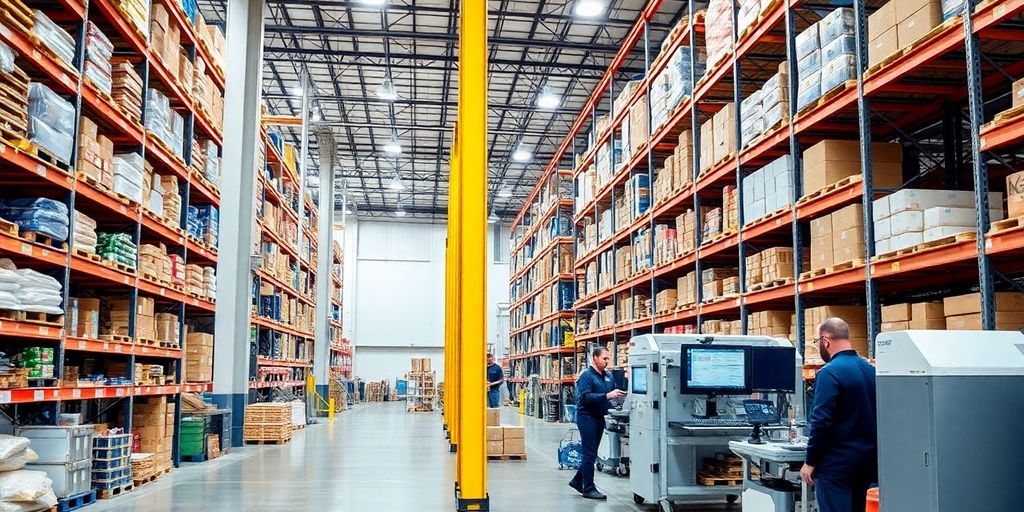
Real-Time Inventory Tracking Benefits
Keeping tabs on inventory in real time is a game-changer. With modern inventory management software, we can see exactly where every product is—from the moment it arrives at the warehouse to when it heads out for delivery. This kind of visibility means fewer surprises and better planning. For example, we can:
- Predict demand more accurately, avoiding overstock or stockouts.
- Implement just-in-time inventory strategies to save on storage costs.
- Quickly trace products, which is super handy if there’s ever a recall.
Reducing Errors in Stock Management
Mistakes happen, but with the right tools, they don’t have to happen as often. Using features like barcoding and RFID tagging, we can cut down on manual errors. Here’s how:
- Automated data entry reduces typos and miscounts.
- Scanning systems ensure the right product gets to the right place.
- Alerts notify us if something doesn’t add up, so we can fix it fast.
Replenishment and Restocking Made Easy
Nobody likes running out of stock—or having too much of it. A good WMS helps us strike the perfect balance. By analyzing sales trends and current stock levels, the system can:
- Suggest when and how much to reorder.
- Prioritize restocking items that are selling fast.
- Flag slow-moving inventory, so we can adjust strategies.
Staying on top of inventory isn’t just about numbers; it’s about keeping our operations smooth and our clients happy.
With tools like inventory management software, we’re not just managing stock—we’re making smarter, faster decisions every day.
Enhancing Labor Management in Warehouses
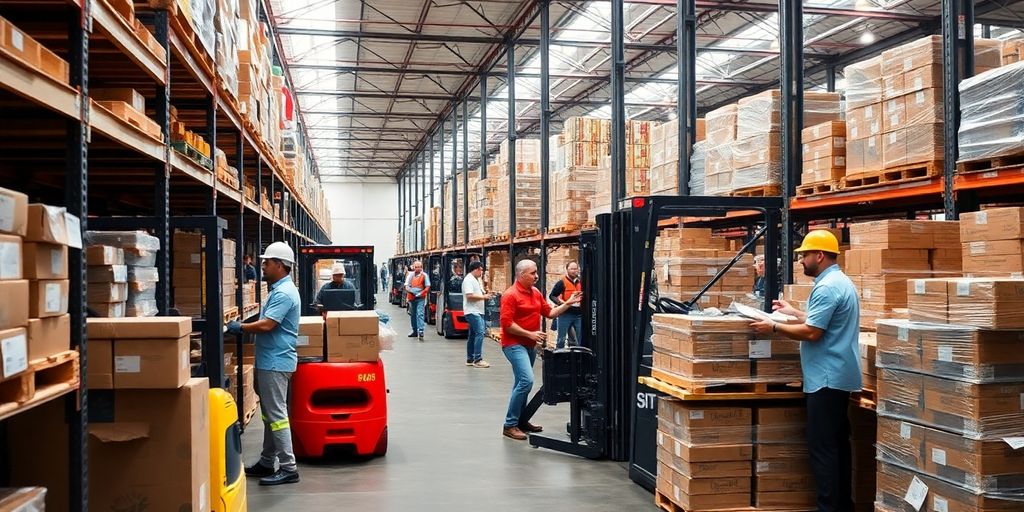
Monitoring Worker Performance with KPIs
Keeping track of how well our team members are doing is key to running a smooth operation. We use Key Performance Indicators (KPIs) to measure productivity, response times, and even accuracy. This helps us identify who’s excelling and where we might need to step in with some extra support. It’s all about making sure everyone feels valued and knows their contributions matter.
Optimizing Task Assignments
Assigning the right task to the right person isn’t just about getting the job done—it’s about doing it efficiently. With the help of a Warehouse Management System, we can match tasks to employees based on their skills, location in the warehouse, and even their workload. This not only saves time but also reduces unnecessary movement, which keeps everyone’s energy focused on what matters.
Training Employees with WMS Tools
Training isn’t a one-and-done deal. We believe in ongoing learning, especially as technology evolves. A good WMS makes this easier by offering tools that assist in training. Whether it’s learning to use new equipment or understanding updated processes, these tools make the transition smoother for everyone. Staying updated ensures we’re always following warehouse operations best practices.
Labor management isn’t just about numbers—it’s about people. By focusing on both efficiency and employee well-being, we create a workplace where everyone can thrive.
The Impact of WMS on Supply Chain Efficiency
Cross-Docking and Yard Management
Cross-docking is one of those strategies that sounds complicated, but it’s really just about getting goods from point A to point B faster. With a Warehouse Management System (WMS), we can track incoming shipments and match them directly with outbound orders. This reduces the need for storage, which not only saves space but also cuts down on handling time. And when it comes to yard management? A good WMS helps us organize trailers, docks, and loading schedules like a pro. Everything is where it needs to be, right when it’s needed.
Reducing Lead Times in Logistics
Nobody likes waiting, and lead times are no exception. By automating processes like order picking, packing, and shipping, a WMS trims down the time it takes to get products out the door. Plus, with real-time tracking, we can spot bottlenecks before they become full-blown delays. It’s like having a crystal ball for your logistics.
Improving Communication Across the Supply Chain
A WMS doesn’t just stop at the warehouse—it’s like the glue that holds the whole supply chain together. By integrating with systems like ERP and transportation management tools, we can share data across the board. This means everyone, from suppliers to delivery drivers, is on the same page. Clear communication leads to fewer mistakes, smoother operations, and ultimately, happier clients.
A well-implemented WMS is the backbone of a streamlined supply chain. It ties everything together, making sure every piece fits just right.
Choosing the Right WMS for Your Warehouse in Omaha, Nebraska
Factors to Consider When Selecting a WMS
Picking the right Warehouse Management System (WMS) isn’t just about picking the fanciest software. It’s about finding what fits your operations and goals. Here’s what we always recommend considering:
- Scalability: Can this WMS grow with your business? If your logistics solutions in Omaha expand, you’ll want a system that can handle the extra workload.
- Ease of Use: A fancy system is no good if your team can’t figure out how to use it. Look for intuitive interfaces and solid training support.
- Integration: Make sure the WMS plays nicely with your existing tools, like ERP systems or barcode scanners.
- Customization: Every warehouse is different. Can the WMS be tailored to meet your specific needs?
The Benefits of Cloud-Based WMS Solutions
Cloud-based systems are becoming a go-to choice for many warehouses, and for good reason. Here’s why they’re worth considering:
- Lower upfront costs: No need for bulky hardware or expensive IT setups.
- Automatic updates: Stay current without lifting a finger.
- Accessibility: Manage your warehouse from anywhere with an internet connection.
- Scalability: Perfect for growing businesses looking for efficient storage solutions Nebraska-wide.
Customizing WMS for Specific Business Needs
No two warehouses are the same, and your WMS should reflect that. Customization is key to making sure your system works for you, not against you. For example:
- If you handle high-volume shipments, look for advanced picking and packing features.
- For warehouses with a lot of SKUs, robust inventory tracking is a must.
- Need to optimize labor? Choose a system with performance tracking and task assignment tools.
A well-chosen WMS doesn’t just manage your warehouse; it transforms it into a streamlined, efficient operation that supports your business goals.
Wrapping It Up
So, that’s the gist of how a Warehouse Management System (WMS) works. It’s like the brain behind the scenes, keeping everything in order—from receiving goods to shipping them out. Whether it’s about tracking inventory, managing labor, or streamlining the pick-and-pack process, a good WMS makes life easier for everyone involved. Gratton Warehouse Company in Omaha, Nebraska, for example, uses these systems to handle logistics, storage, and more. At the end of the day, it’s all about making sure things run smoothly and customers stay happy. Thanks for sticking around to learn about it!
Frequently Asked Questions
What is a Warehouse Management System (WMS)?
A Warehouse Management System (WMS) is software designed to help manage and streamline daily warehouse tasks. It handles everything from receiving goods to shipping them out, ensuring efficient operations.
How can a WMS improve warehouse efficiency?
A WMS boosts efficiency by automating tasks like inventory tracking, picking, packing, and shipping. It reduces errors and speeds up processes, saving time and money.
What are the benefits of using a cloud-based WMS?
Cloud-based WMS solutions are cost-effective as they don’t require expensive hardware. They’re easy to update, accessible from anywhere, and provide real-time data, making them highly convenient.
How does a WMS help with inventory management?
A WMS helps track inventory in real-time, reducing errors and ensuring accurate stock levels. It also simplifies restocking and replenishment processes.
Can a WMS integrate with other technologies?
Yes, a WMS can work with tools like barcode scanners, RFID systems, robotics, and even transportation management systems to create a seamless workflow.
What industries benefit the most from a WMS?
Industries like e-commerce, manufacturing, pharmaceuticals, and cold storage benefit greatly from WMS as it helps them manage large inventories and complex operations efficiently.